I want to improve my sleep. This is my Health Priority!

To improve your sleep, the Pharmacie Principale suggests the following approach :
1. I want to understand before I act
"Sleeping is no mean art: for its sake one must stay awake all day," said the sage to Zarathustra.
How does it work?
Sleep is an essential biological function. We cannot live without sleep. Although sleep takes a third of our life, its functions are still a mystery.
Sleep allows us to recharge our batteries, to regenerate body functions, strengthen memory, improve learning and strengthen our immune system. It protects us from stress, eliminates toxins accumulated during the day and allows us to conserve energy. Sleep promotes growth in children, rejuvenates our cells, and regulates our hormones of satiety and our biological cycles.
During sleep, our bodies do not really rest! There is intense activity in our hearts, our breathing, and especially our brains. Some researchers believe that the purpose of sleep is to prepare for being awake.
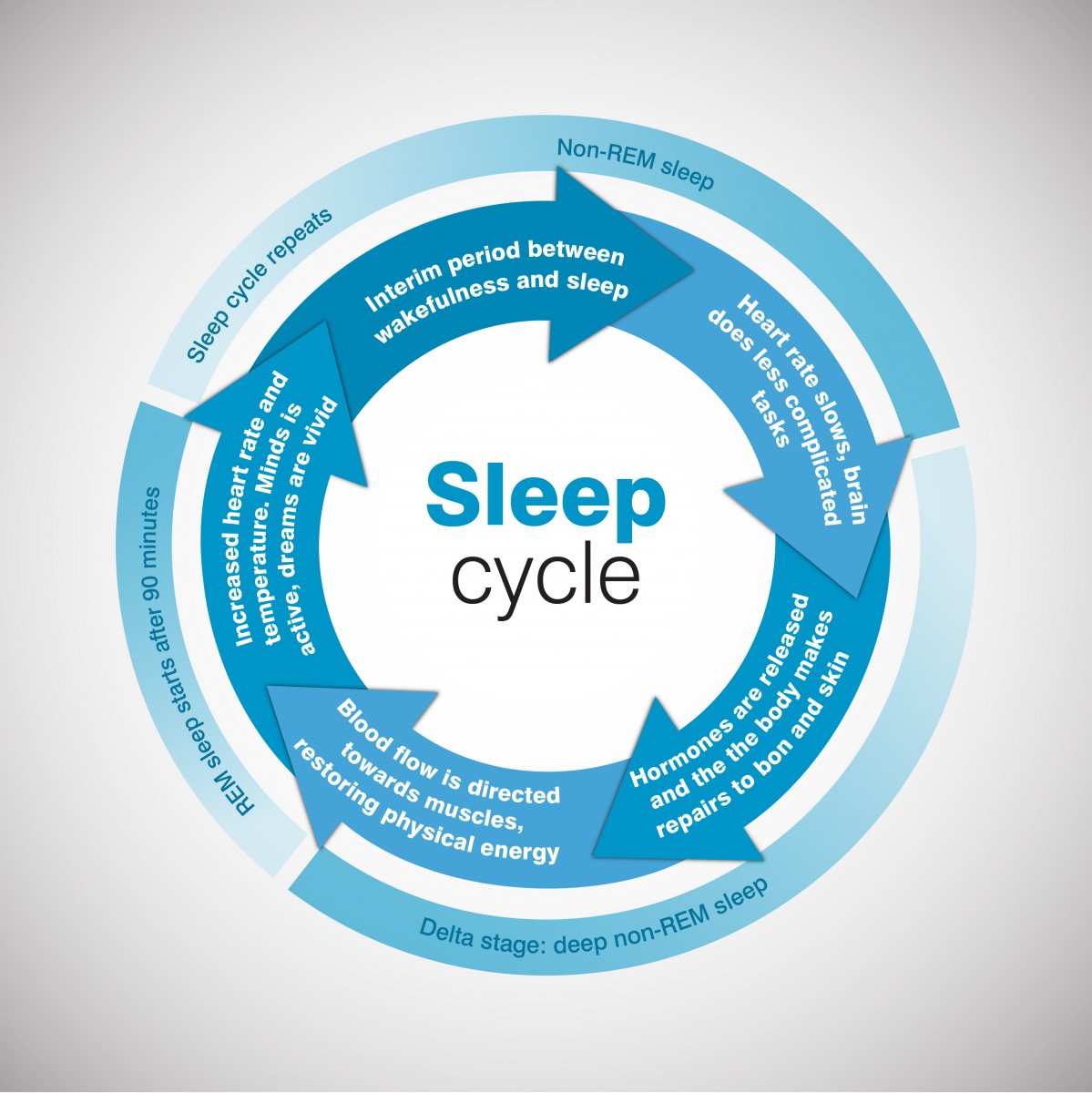
In other words, the quality of our functioning while awake will influence our sleep, and the quality of our sleep will influence that of our time awake. This means that what we do while awake will have a decisive impact on the quality of our sleep.
Key sleep points
- Sleep duration is very variable. It ranges from 4 to 12 hours with about 60% of individuals who sleep 7 to 8 hours a night.
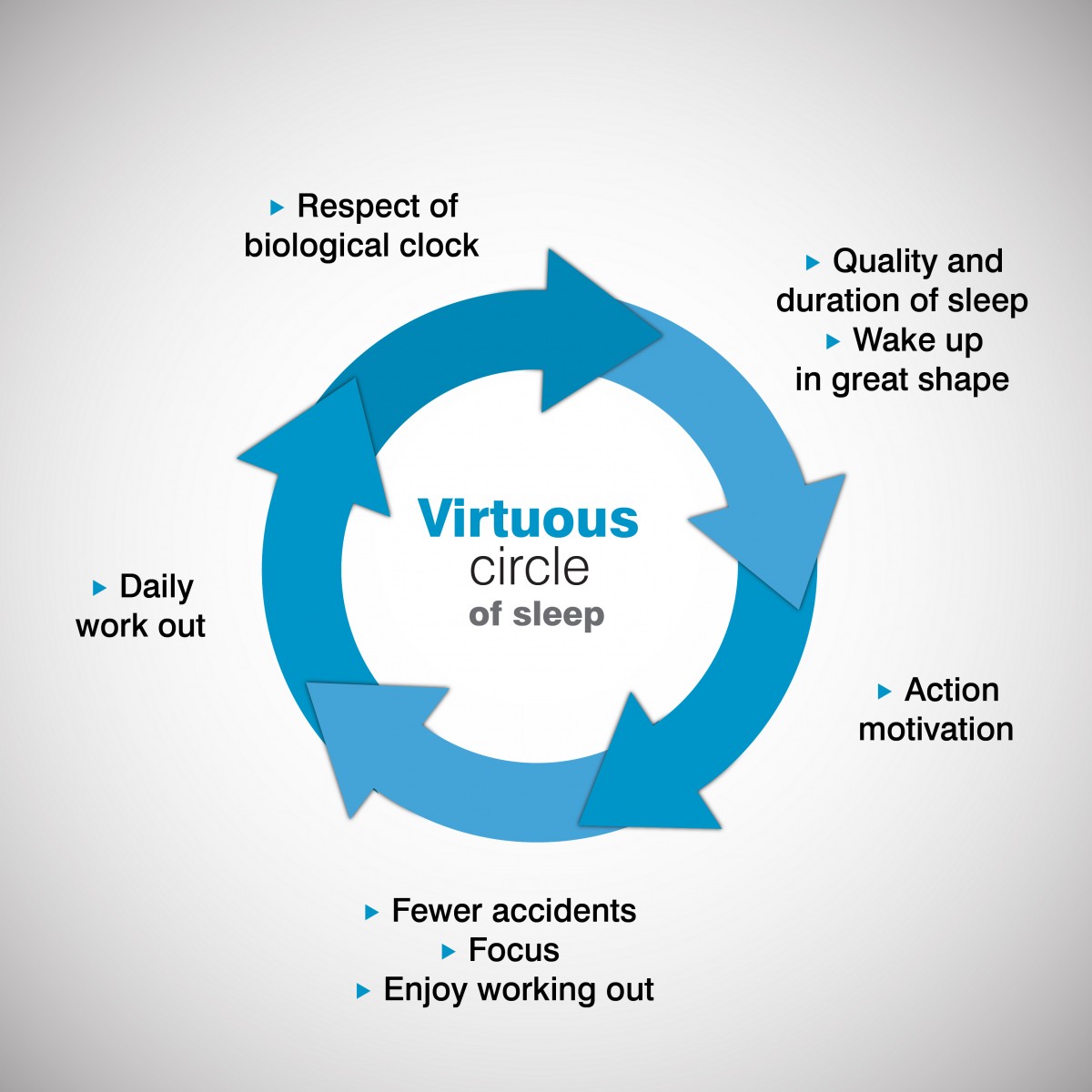
- Sleep consists of two types: slow wave sleep, which seems to be restful, and REM sleep in which we dream. The passage of sleeping from slow wave to REM is divided into five phases, which constitute one cycle.
- Each cycle lasts about 90 minutes, or 1 hour and 30 minutes. According to our individual needs, we sleep for 4 to 6 cycles of sleep per night.
Our internal clock, or ‘biological clock’, regulates our sleep phases and rest. It is synchronised with the day and night and is independent of our will. It is therefore not possible to sleep if we do not feel like it.
Several things influence our biological clocks:
- Light controls the secretion of melatonin, a ‘sleep hormone’. Melatonin is secreted in the dark. It sends signals to indicate it's time to go to sleep.
- Physical activity, particularly endurance exercise, encourages deeper sleep through the change in body temperature. Body temperature is highest during physical activity. Its decrease promotes sleep.
- Mealtimes and food consumed affect sleep through the production of specific hormones.
- Social contact also seems to influence the timing of sleep rhythms.
- Napping may also modify our sleep cycles.
Fatigue and drowsiness are frequently confused. Fatigue occurs following a sustained effort, after which one needs to rest. Drowsiness may occur regardless of effort. It is the overwhelming feeling of drowsiness which indicates a need to sleep.
7 signs of lack of sleep that are of concern
In addition to circles beneath the eyes and daytime sleepiness, lack of sleep results in:
- Weight gain. Lack of sleep disrupts the hormonal system responsible for satiety and decreases satiety, leading to a strong desire for sweet foods thus causing weight gain.
- Reduced memory and concentration. During sleep, the brain consolidates memories and improves learning.
- Mood disorders. Irritability, emotionality, anxiety and depression are associated with lack of sleep.
- Lack of coordination. Sleep deprivation promotes sleepiness which can cause accidents.
- Infections. Immunity is depressed by lack of sleep, which increases the risk of colds, flu and other infectious diseases, as well as autoimmune diseases.
- Development of chronic diseases. Less than 5 hours of sleep a night promotes the development of diabetes, cardiovascular disease (heart attacks and strokes), and possibly cancer and Alzheimer's.
- Decreased libido. Libido is an indicator of health in general. The sleep disorders and consequences mentioned above negatively affect libido.
Common causes of sleep disorders
Stress, emotional shock (bereavement, job loss, moving), pain, fever, coughing, certain medications (antidepressants, medications containing caffeine, sleeping tablets used over the long term), stimulating or caffeinated beverages, tobacco, alcohol especially at night before bed, anxiety, depression, diseases (cancer, arthritis, heart problems), spouses, pets, jet-lag, intensive physical activity less than two hours before sleeping, intensive intellectual effort before sleeping, blue light electronic screens, insufficient activity during the day, napping, late and fatty meals, elevated temperatures in the room.
The primary sleep disorders (Lausanne University Hospital - 2013)
- Sleep apnoea. This is a cessation of breathing for at least 10 seconds during sleep. When these apnoeas multiply overnight, they have an effect on waking life, such as drowsiness and lack of concentration.
- Insomnia. This corresponds to sleep perceived as difficult to attain, insufficient or non-restorative which is accompanied by diurnal disturbances such as fatigue, drowsiness, impaired memory, concentration or mood.
- Hypersomnia. This is characterised by severe drowsiness with the need to sleep many times during the day.
- Restless leg syndrome. This is a sensory manifestation, such as tingling, burning and internal nervousness, usually in the legs (and sometimes arms), associated with an irresistible urge to move that prevents sleep.
- Parasomnias. These include night terrors, sleepwalking, nightmares, bedwetting (urinating involuntarily), catathrenia (expiratory groaning), hallucinations occurring during the transitions at the start (hypnagogic) or end (hypnopompic) of sleep, and eating disorders related to sleep.
- Internal clock disorders. Some people have internal clock disruptions with a late secretion of melatonin (phase delay). These people will have difficulty falling asleep and will complain of a difficult waking in the morning. Conversely, those who have already secreted melatonin in the afternoon (phase advance) will complain of drowsiness in the early evening and morning insomnia.

General advice for people suffering from sleep disorders
Dr Richard R Bootzin (Sleep Research Laboratory at the University of Arizona) suggests the following to fight against insomnia:
- Lie down only when you are tired and you are ready to sleep.
- During the hour before bedtime, avoid all strenuous activities, both physical and intellectual.
- Use your bed for sleeping: do not read, do not watch TV, do not eat and do not think about your problems in bed. Sex is the only exception to this rule.
- If you wait in bed, eyes closed, without managing to fall asleep in the first 20 minutes, get up and perform a calm activity in another room. When you feel sleepy, go to your room to sleep.
- If you still cannot sleep, repeat step 4 as often as necessary. Avoid sleeping anywhere other than your bed.
- Set your alarm clock to the time of your choice and get up at the same time every day, regardless of the number of hours of sleep the night before. This will help you acquire a constant sleep pattern.
- Do not try to nap during the day.
For more information visit the info-santé section of our website: www.pharmacie-principale.ch
Additional tests to understand and measure one's progress:
- The Epworth Sleepiness Scale allows one to assess daytime sleepiness
If you are looking for advice, you can go to any of our 8 pharmacies Geneva and Chavannes.
2. I want to know my health status
One can only improve that which can be measured.
What are the steps that will allow me to know my status, and whether or not my lifestyle contributes positively to my heath?
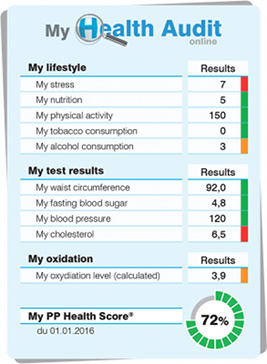
The Pharmacie Principale suggests the PP Health Audit, a simple and effective tool developed with the help of specialists, to establish the state of one's health and track one's progress.
With the PP Health Audit that we make available to our customers, it is now possible for anyone to calculate their PP Health Score online in 10 minutes.
Your PP Health Score (72% in this example) will be your reference point for assessing the impact of your new lifestyle choices.
- If your Health Score improves, it shows that you have made the right choices.
- If your choices are unwise, your Health Score will decrease.
If you already have done a PP Health Audit and you already know your starting point, choose an objective and method below. If not, we recommend you complete a PP Health Audit before proceeding.
3. I want to set a goal
- Identifying what is causing my sleep disruption
- Acting to improve my alertness
- Preventing sleep-related illnesses
- Improving my Health Score
4. I want to create a personalised approach
To improve your sleep, the Pharmacie Principale has 12 suggestions. We recommend that you choose the 3 that you find relevant and easy to implement, and start them today. The following suggestions are for your information. They are not intended to replace a consultation with your doctor.
- I will try to follow Dr Richard R Bootzin's recommendations (listed above)
- If this does not help, I will talk to my doctor about sleep
- I will exercise during the day, in a way that I enjoy, if possible outdoors
- I will ask my pharmacist if my prescriptions interfere with my sleep
- I will avoid coffee and tea after 4:00 p.m.
- I will avoid intense physical or intellectual exertion before bed
- I will avoid heavy (fatty) and late evening meals, and will drink more fluids two hours before bed
- I will reduce my alcohol and tobacco consumption at night
- I will lower the room temperature
- I will not sleep with my pet, and I will wear ear plugs to avoid noise
- I will set the alarm clock for the same time every morning, and will go to bed at a time that allows for 90-minute sleep cycles
- I will wear a sensor to get an indication of the quality of my sleep
5. I want to be walked through every step
How can we help you improve your health?
Based on your Health Audit results, we recommend:
- Express advice offered in one of our 8 pharmacies in Geneva and Chavannes (walk-in service)
- A 30-minute interview (costing CHF 30.-, with the first 10 minutes free) in the dispensary of the Pharmacie Principale at 7, rue de Coutance to analyse your PP Health Audit results and help you develop a real health strategy
So that we can respond to your support request in a personalised manner, please click the following link: I want assistance, and complete our contact form.
6. I just want to buy a product that will be good for me
Changing one's slepping habits takes time. In the meantime, you can partially offset some losses by consuming targeted, quality food supplements.
Below are some products known to reduce the negative effects of insufficient sleep:
- Plants and plant extracts, aromatherapy
- Vitamins, trace minerals, antioxidants
- Amino acids
- Probiotics
The body's perception and reaction to insufficient sleep are different for each individual. Therefore, a ‘sleep’ programme must be custom-designed with quality products from a known source. To guarantee the outcome, the advice must be customised.
In each of our 8 pharmacies in Geneva and Chavannes, you will find nutrition and micronutrient specialists able to help you to make the right choices.
If you have completed the PP Health Audit, bring your results with you so we can make our advice even more relevant.
7. I want to track and manage my health progress
For several years, Pharmacie Principale has developed an approach to manage and improve health capital called the PP Health Audit. This approach was originally developed primarily for our pharmacists. We have now made it available to our customers who want to optimise the management of their health online.
In 10 minutes, using your answers to the questionnaire, the PP Health Audit gives you a PP Health Score. Your score consists of 10 key health indicators that you can control and improve, either on your own, or with the assistance of a professional.
Among the key indicators, there are 7 test results that you probably have in your medical records. If you do not have them, you can have the tests done for only CHF 30.- at our partner lab, Dianalabs (no appointment is necessary).
The goal is to gradually bring your Health Score up to 100%, because this means that you are doing everything in your power to be and remain healthy.
We recommend performing the PP Health Audit at least once a year.
To take or retake the PP Health Audit click on the following link: http://www.auditsante.ch/
Many professionals focus on disease. Since 1912, the Pharmacie Principale has been focusing on your health.
Thank you for your trust. – JPh Toledo